Building a website in 2025 is easy.
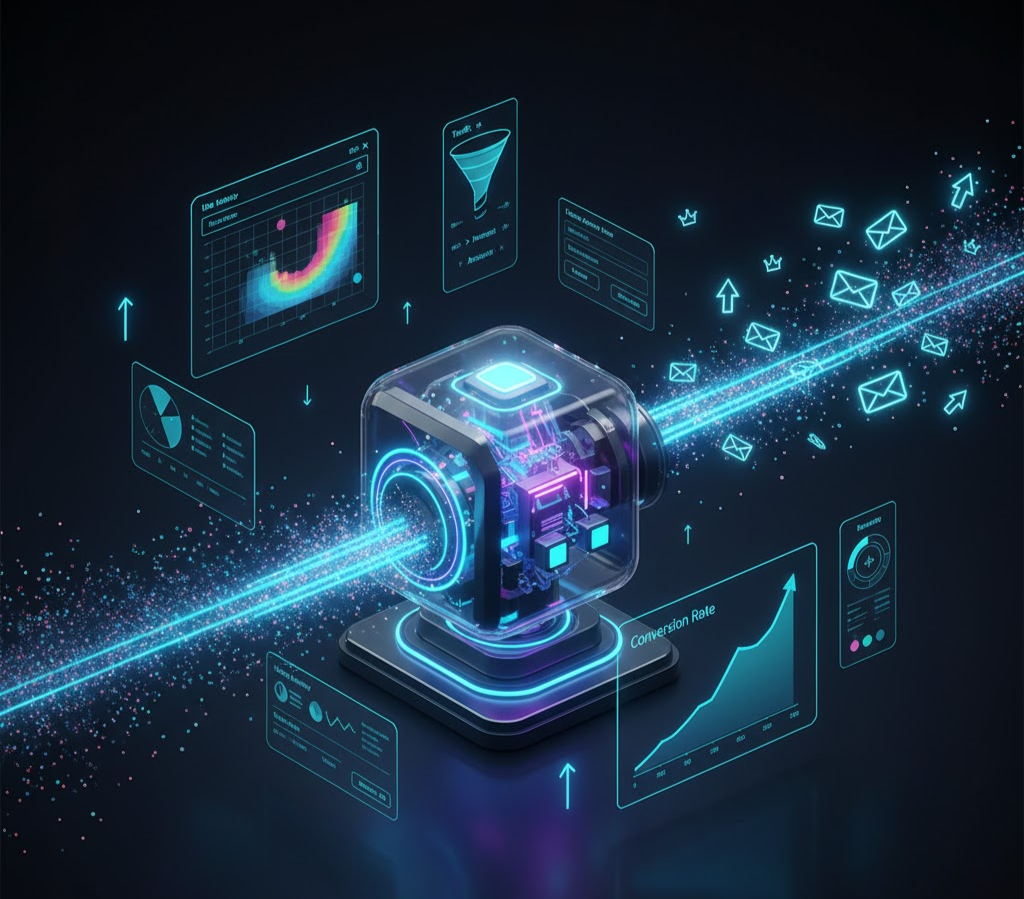
Developing a website that generates leads continuously, like a well-functioning machine, is what distinguishes successful businesses from those that rely on manual lead chasing.
Here’s the truth most agencies won’t say out loud:
They focus on design. They prioritize design over conversion optimization.
They deliver pretty websites, then hope they perform.
But performance doesn’t come from aesthetics.
It comes from psychology, structure, and a strategy rooted in data, not guesswork.
After 30+ years in digital marketing, watching thousands of sites bleed leads, plateau, or explode in growth, one thing is clear:
A website becomes a lead machine only when you engineer it to convert, not just exist.
This guide will show you exactly how.
Let’s break down the 7 conversion tactics agencies rarely tell you and how to build a site that captures leads even while you sleep.
1. Start With Psychology, Not Design (The Step Most Agencies Hide)
Most agencies jump straight into templates, layouts, colors, or branding.
But high-converting websites start with something deeper:
Human behavior.
If you understand what makes people click, trust, buy, or leave, you can engineer conversions instead of hoping for them.
Here are the psychological triggers every conversion optimizer uses:
• Cognitive Ease Make every decision feel effortless.
People avoid anything confusing.
Your message must be clear in seconds, not minutes.
• Emotional Drivers Speak to desire, not features.
Visitors want outcomes, not explanations.
They’re asking, “What does this do for me?”
• Loss Aversion: Show what they risk by not acting.
People hate losing more than they love winning.
Your copy should highlight the cost of inaction.
• Social Proof Let others validate yours for them..
Case studies, reviews, and testimonials these reduce fear instantly.
The websites that dominate conversions don’t guess what their visitors want.
They mirror their psychology, validate their emotions, and guide them toward a decision that feels safe.
This approach is the core of every successful conversion optimization strategy.
2. Build a High-Impact Hero Section (Your Most Valuable Real Estate)
Your hero section determines 70–80% of your website’s success.
Yes, really.
Within seconds, visitors decide:
“Does this help me?”
“Can I trust them?”
“Should I scroll or hit the back button?”
A weak hero section kills lead generation before it starts.
Here’s what a conversion-optimized hero must have:
A crystal-clear headline
State the problem you solve or the transformation you deliver.
A value-rich subheadline
Clarify who you help and why it matters.
A frictionless CTA (Call to Action)
Make it obvious and appealing.
Micro-copy (like “Takes 30 seconds”) boosts conversions.
Trust signals above the fold.
Logos, reviews, star ratings, recognition, results.
An image or visual that reinforces your message
Use real proof or product visuals instead of random stock photos.
A conversion consultant knows this is where 50% of the battle is won.
3. Turn Your Website Into a Guided Conversion Path (Not Random Pages).
Most websites feel like a library with no librarian.
Information everywhere, no journey, no goal.
Visitors don’t convert because they’re left alone to figure everything out.
A lead machine website behaves differently; it acts like a guided path.
A conversion path includes:
- Awareness content (blogs, comparisons, guides)
- Signpost CTAs that lead deeper
- Lead magnets (reports, tools, audits)
- High-intent pages
- Nurturing emails
- Sales-driven landing pages
Each page nudges the visitor toward the next step subtly, intentionally, and strategically.
This is where elite conversion optimization consultants outperform traditional agencies.
They don’t build pages; they build flows.
4. Master Micro-Conversions Before Macro-Conversions
Most businesses obsess over one thing:
“Why aren’t people filling out the form?”
But maximizing macro conversions (like demo bookings or purchases) starts with micro-conversions, such as
- Scroll depth
- Button clicks
- Video watches
- Form field interactions
- Add-to-cart clicks
- Lead magnet downloads
- Pricing page visits
Each micro-conversion represents momentum.
Every small action reduces resistance to the next one.
Micro-optimization is one of the most effective techniques for improving conversion rates, yet many agencies never track it.
When you fix micro-friction points, your main conversion skyrockets naturally and predictably.
5. Use Modern Conversion Optimization Tools (Not Guesswork).
Data is the lifeblood of conversion gains.
If you want to boost online sales or improve your lead flow, you need tools that show you:
- Heatmaps
- User behavior
- Drop-off points
- Scroll patterns
- Button engagement
Here are the essential tools for optimizing website conversions that every high-performing website uses:
• Hotjar Heatmaps + recordings
• Microsoft Clarity user behavior insights
• GA4 Advanced Analytics
• Optimizely / Convert / VWO A/B testing
• Typeform or HubSpot Forms: High-converting forms
These tools turn your website into a data-rich testing system instead of a guessing game.
Even small insights like a CTA being too low on the page can add 10–20% more conversions instantly.
6. Landing Pages Built to Convert (Not Just Inform)
High performers know this:
Your landing page is not a digital brochure.
It’s a persuasion engine.
A conversion-optimized landing page includes:
A single goal
One page. One action.
A powerful value proposition
Say what they get and why it matters.
Real proof
Case studies, numbers, logos, and screenshots.
Objection-handling sections
Address the fears that individuals may not express openly.
Social credibility everywhere
People trust people, not brands.
Fast load speed (under 2 seconds)
Speed is a silent trust factor.
This applies even more to e-commerce website optimization, where a few seconds of hesitation can lose the sale.
Landing pages are where psychology, design, and clarity meet to create unstoppable momentum.
7. Lead Capture That Feels Natural (Not Annoying)
Most websites beg for leads.
Lead machines earn them.
Here’s what high-performing lead capture looks like:
• Multi-step forms
Lower cognitive load = higher conversions.
• Lead magnets with actual value
Not generic PDFs.
Think calculators, templates, audits, and price guides.
• Exit-intent popups that offer something meaningful
Save abandoning traffic with a strategic offer.
• Micro-yes pathways
Small commitments lead to big commitments.
These lead capture strategies work because they align with human behavior, not against it.
Bonus: Performance & UX Your Silent Conversion Killers
You can optimize messaging, strategy, and CTAs all day…
But none of it matters if your site:
- loads slowly
- feels clunky
- looks outdated
- confuses users
- isn’t mobile-friendly
Website performance optimization is no longer optional.
A 1-second delay can drop conversions by up to 20%.
Fast, intuitive, simple websites convert.
Complex ones don’t.
Conclusion: Your Website Has the Potential to Be a Lead Machine If You Engineer It Correctly.
Most agencies won’t tell you what truly drives conversions.
Not because they’re hiding secrets…
But because real conversion optimization requires expertise, time, testing, psychology, and strategy, not just nice design.
If you implement these 7 tactics, you’ll be miles ahead of your competitors:
- Speak to human psychology
- Build a hero section designed for clarity
- Create guided conversion paths
- Track micro-conversions
- Use the right tools
- Optimize landing pages for persuasion
- Capture leads with intention
Do this consistently, and your website becomes more than a digital presence.
It becomes your most reliable sales engine.
It becomes a reliable source of leads.
FAQS
1. Why isn’t my website generating leads even though I receive traffic?
Most websites fail because they lack a clear value proposition, proper conversion paths, and psychological triggers. Without structured conversion optimization, visitors don’t know what action to take.
2. What is the biggest reason visitors don’t convert on my site?
Confusion. If your messaging, layout, or offer isn’t immediately clear, users exit. Clarity in your hero section and call-to-action is one of the fastest ways to improve website conversions.
3. How do I know which parts of my website are hurting conversions?
Use heatmaps, session recordings, and analytics from tools like Hotjar or Microsoft Clarity. They reveal friction points, scrolling behavior, and drop-offs your agency often never shows you.
4. Why is my landing page not converting even after redesigning it?
A redesign doesn’t equal optimization. You need persuasive copy, social proof, structured trust elements, and a single focused goal. A design-only upgrade rarely fixes conversion problems.
5. What should I optimize first if I want quick conversion wins?
Start with your hero section, CTA clarity, site speed, and form friction. These areas produce the fastest conversion rate improvement with minimal technical change.
6. Do I need a consultant for conversion rate optimization, or can I do it myself?
You can handle basic fixes, but consultants bring testing frameworks, behavioral data analysis, and proven strategies. They see what typical agencies and business owners miss.
7. How can I turn my website into a long-term lead-generation machine?
Build continuous conversion paths, test micro-conversions, strengthen your value proposition, and use data-driven optimization tools. Conversion isn’t a one-time project it’s an ongoing strategy.