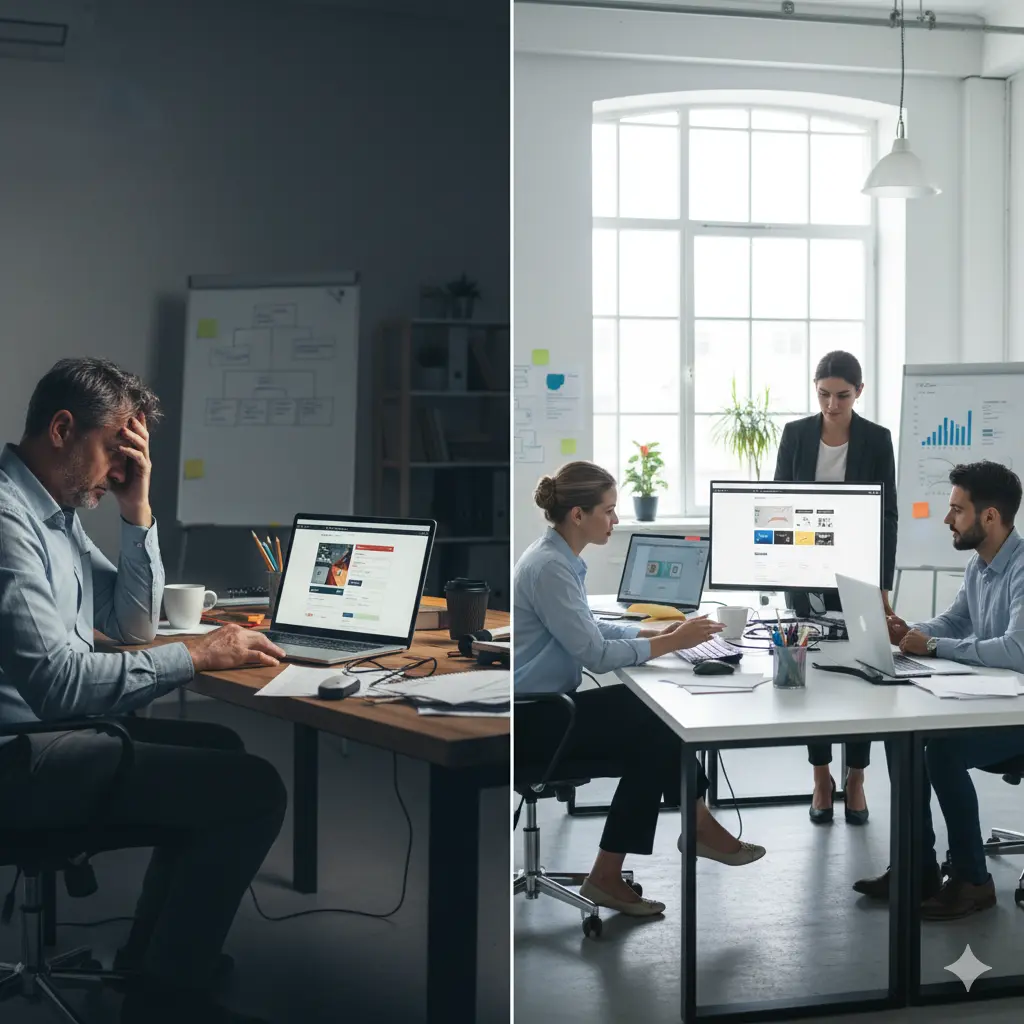
Building a website is no longer optional for businesses. It’s the first impression for most customers, and it directly affects sales, trust, and visibility online. While do-it-yourself (DIY) website builders seem like an easy fix, they often create problems that limit long-term growth. On the other hand, hiring a web development company gives businesses professional design, stronger SEO, better performance, and scalable solutions that grow with them.
The choice between a DIY builder and a professional developer is common, but the outcomes couldn’t be more different. To understand why a web development company often beats DIY platforms, let’s look at the most important differences.
Ready to grow beyond DIY limits? Partner with Web 6 Solutions for a custom website that attracts, engages, and converts.
Common Mistakes Businesses Make With DIY Websites
Many small business owners turn to DIY website builders because they are quick, cheap, and marketed as beginner-friendly. These platforms offer drag-and-drop features and ready-made templates that make it easy to publish a site in hours. But convenience comes at a cost.
Some of the most common mistakes businesses make with DIY websites include:
- Generic design that looks identical to competitors using the same template.
- Poor SEO setup, making it difficult for the website to rank on Google.
- Slow loading times caused by bloated code and limited hosting options.
- Weak security features that put sensitive customer data at risk.
- No scalability, which means the site breaks down or slows as traffic grows.
According to a 2024 Statista report, over 64% of small businesses struggle with online visibility because of poorly optimized websites. DIY builders promise simplicity, but they often trap businesses in limitations that cost more in the long run.
When Hiring a Web Development Company Makes More Sense
A professional web development company solves these issues from the start. Instead of relying on templates, developers create custom websites designed for the brand, its goals, and its target audience. They also handle the technical side: speed optimization, SEO, mobile responsiveness, and security: ensuring the website works as a true business asset.
Situations where hiring a web development company makes the most sense include:
- Growing businesses that need scalable websites to handle higher traffic.
- Brands focused on SEO, where professional developers implement advanced optimization techniques.
- E-commerce companies, where secure transactions and high-performing product pages are critical.
- Businesses needing unique branding, where templates simply can’t deliver.
For example, HubSpot found that 38% of users leave a website if the layout looks unattractive. DIY platforms rarely allow deep customization, but a web development company ensures your site looks professional, trustworthy, and engaging.
In short, DIY website builders are fine for temporary projects or personal portfolios. But businesses serious about growth, security, and long-term value benefit far more from partnering with a professional team.
Limitations of DIY Website Templates for Branding
DIY website builders rely heavily on templates. While these pre-designed layouts make it simple to get a site online quickly, they come with serious limitations for branding and business growth. Templates are designed to be one-size-fits-all, which means thousands of businesses might be using the exact same layout.
This lack of uniqueness creates two big problems:
- Brand identity suffers: customers may not remember your site because it looks like everyone else’s.
- Design flexibility is restricted: you can only adjust colors, fonts, or images within fixed parameters.
For companies that want to stand out, this is a huge drawback. According to a survey by Stanford Web Credibility Research, 75% of users judge a company’s credibility based on its website design. A cookie-cutter template simply doesn’t send the message of professionalism or trust.
Another issue is that template-heavy sites often aren’t optimized for specific business needs. For example, a local restaurant may need a reservations system, or a law firm may need a secure client portal. Most DIY platforms don’t support these functions without costly add-ons or workarounds.
How Custom Design Improves User Experience and Conversions
Hiring a web development company changes the game. Instead of choosing from generic templates, businesses get custom-built designs that align with their brand story and goals. Custom design is more than just aesthetics: it impacts usability, engagement, and ultimately conversions.
Key advantages of custom design include:
- Unique branding: Developers create designs that reflect your company’s personality, values, and industry.
- Optimized navigation: A professional site ensures visitors can find what they need in just a few clicks.
- Mobile-first design: With over 58% of global web traffic coming from mobile devices (Statista 2024), developers ensure sites look perfect on any screen size.
- Conversion-driven layouts: Buttons, forms, and calls-to-action are strategically placed to increase leads and sales.
For example, a retail brand that switched from a DIY builder to a custom-built site saw a 30% increase in conversions simply because the new layout made checkout faster and more intuitive. That’s the kind of return you don’t get with a basic template.
A web development company doesn’t just build a website: it builds a digital experience that supports business objectives. From seamless navigation to modern layouts, every detail is designed to keep visitors engaged and moving toward action.
In contrast, DIY templates might get you online fast, but they rarely provide the flexibility or depth required for long-term success. Businesses that invest in custom design reap the benefits of stronger branding, higher user trust, and measurable growth.
Why DIY Website Builders Struggle With Advanced SEO
Ranking on Google takes more than adding a few keywords to your pages. SEO involves site speed, mobile optimization, structured data, internal linking, meta information, and dozens of other factors. Unfortunately, DIY website builders fall short in most of these areas.
Here are some of the main SEO challenges with DIY platforms:
- Limited control over technical SEO: Most DIY builders don’t let you edit robots.txt files, sitemaps, or canonical tags.
- Weak page speed performance: Preloaded templates add bloated code that slows down websites.
- Restricted on-page SEO options: Title tags, meta descriptions, and alt text are often locked behind generic fields.
- Poor URL structures: Many DIY builders automatically generate long, clunky URLs that aren’t search-friendly.
According to Backlinko’s research, pages in the top 10 Google results load in 2.3 seconds or less on average. DIY websites rarely meet this standard, making it difficult to compete with professionally developed sites.
Technical SEO Benefits Only a Professional Company Can Provide
A web development company understands how to build a website with SEO baked into every layer. Developers don’t just design: they optimize the site’s structure, code, and performance to ensure it ranks higher and drives more organic traffic.
Key SEO benefits of working with professionals include:
- Clean, optimized code: Developers remove unnecessary scripts and ensure the site runs smoothly.
- Mobile-first performance: Google’s mobile-first indexing means sites must be fully optimized for smartphones.
- Structured data integration: Schema markup helps Google understand your content and improves click-through rates.
- Faster load times: Developers use optimized hosting, caching, and compression techniques.
- Scalable SEO strategies: Professional sites can integrate advanced tools for analytics, keyword tracking, and A/B testing.
For example, businesses that migrate from DIY to professional websites often see immediate improvements in rankings. A small e-commerce company that hired a web development firm to rebuild its website reported a 45% increase in organic traffic within three months, simply because the new site was SEO-friendly from the ground up.
In addition, developers collaborate with SEO specialists to ensure every aspect of the site: from URL structure to internal linking: supports long-term visibility. DIY platforms don’t provide that level of customization, which is why most of them struggle to rank against professional websites.
The truth is simple: without strong SEO, even the best-looking site won’t generate traffic or sales. A web development company gives businesses the technical foundation needed to compete in Google’s search results.
Don’t let poor SEO hold your business back. Let Web 6 Solutions build a performance-driven website that ranks and delivers results.
Hidden Issues Slowing Down DIY Websites
A website’s performance directly impacts user experience and SEO. If a page takes too long to load, visitors leave before even seeing the content. DIY website builders often create slow, clunky sites because of hidden issues in the backend.
Some common performance problems with DIY platforms include:
- Bloated code: Templates come preloaded with unnecessary CSS, JavaScript, and plugins.
- Shared hosting limits: Many DIY platforms host thousands of sites on the same server, which slows response times.
- Unoptimized images and media: DIY sites rarely compress images, which increases load times.
- Plugin dependency: Extra functions like contact forms or galleries rely on third-party plugins that drag performance down.
Google research shows that 53% of mobile users leave a site if it takes longer than three seconds to load. This is one of the biggest weaknesses of DIY builders. Even if the site looks fine on desktop, it often fails on mobile devices where most traffic comes from.
How Developers Optimize Speed, Hosting, and Performance
A web development company approaches speed and performance as a core priority. Instead of relying on one-size-fits-all hosting, developers configure websites with optimized servers, caching systems, and lightweight code.
Here are ways professional developers improve website performance:
- Custom-coded features: Instead of using heavy plugins, developers build streamlined features that run faster.
- Image and media optimization: Files are compressed and delivered through content delivery networks (CDNs) for faster loading worldwide.
- Advanced caching strategies: Browser and server caching reduce page reload times.
- Dedicated hosting: Businesses can choose VPS or cloud hosting instead of overloaded shared servers.
- Mobile optimization: Sites are tested across multiple devices to ensure speed is consistent.
The result is a site that loads quickly, keeps visitors engaged, and performs well in search engines. Fast sites don’t just improve user experience: they also convert better. According to Portent, a site that loads in one second has a conversion rate three times higher than a site that loads in five seconds.
Real-world example: a service-based company moved from a DIY builder to a professionally developed site and reduced its average page load time from 7 seconds to under 2 seconds. This single change led to a noticeable drop in bounce rate and an increase in online inquiries.
DIY platforms might seem cost-effective at first, but the long-term impact of slow performance is expensive. Lost leads, poor rankings, and frustrated users add up quickly. A web development company ensures your website is built for speed, giving you an edge over competitors still stuck with DIY solutions.
Common Security Risks in DIY Website Builders
Online security is one of the most overlooked issues in DIY platforms. These builders focus on ease of use, not enterprise-grade protection. As a result, businesses using DIY websites face higher risks of data breaches, hacking, and malware.
Some of the most common security issues with DIY websites include:
- Shared server vulnerabilities: Thousands of websites hosted on the same server make every site an easier target.
- Outdated plugins: Many features rely on third-party apps that may not be updated regularly, leaving gaps for hackers.
- Weak SSL certificates: Basic plans may include SSL, but the encryption is often minimal.
- Limited backup and recovery: If the site is compromised, restoring data can be difficult or impossible.
Cybercrime costs are rising fast. A report from Cybersecurity Ventures estimates that cybercrime will cost the world $10.5 trillion annually by 2025. Small businesses are not immune: in fact, they are often targeted because their security measures are weaker. A DIY website that isn’t secure not only risks downtime but also damages customer trust.
Professional-Grade Website Security and Data Protection
A web development company takes a proactive approach to security. Instead of relying on generic tools, developers implement custom security measures designed for the business and its users. This makes it far harder for hackers to break in and ensures sensitive customer data is protected.
Key security advantages of hiring a professional team include:
- Advanced SSL integration: Strong encryption to protect transactions, especially for e-commerce websites.
- Firewall and malware protection: Developers set up web application firewalls and scanning systems.
- Regular software updates: Core files, plugins, and servers are monitored and patched quickly.
- Automated backups: Professional sites are backed up daily or weekly, reducing downtime risk.
- Custom security configurations: Developers build security layers tailored to the company’s operations.
For example, an e-commerce brand using a DIY platform might struggle to implement PCI DSS compliance (required for processing credit cards). A web development company ensures full compliance, giving customers confidence when entering payment details.
Data protection also matters for reputation. A single breach can cost thousands of dollars in recovery fees and lead to lost customers. Studies show that 60% of small businesses close within six months of a cyberattack. Investing in professional web security isn’t optional: it’s essential for survival.
Ultimately, a DIY builder leaves businesses exposed, while a web development company builds sites with enterprise-level protection. From firewalls to backup strategies, every layer is designed to reduce risk and protect both the business and its customers.
Why DIY Websites Can’t Handle Growing Businesses
A website that works for a small startup may collapse under the pressure of growth. DIY website builders are designed for simplicity, not scalability. Once traffic increases or the business needs advanced features, the cracks start to show.
Some common scalability issues with DIY websites include:
- Traffic bottlenecks: Shared hosting plans often can’t handle spikes in visitors.
- Limited storage and bandwidth: DIY platforms cap resources, forcing businesses to upgrade or pay hidden fees.
- Feature restrictions: Adding complex tools like booking systems, APIs, or customer portals is nearly impossible.
- Performance drops: As more content and plugins are added, DIY sites become slower and less reliable.
For example, a local business may outgrow a template-based site once it starts serving national or international customers. Without scalability, the site struggles with user demand, which directly affects sales and customer satisfaction.
How Developers Build Scalable Websites With Room to Expand
A web development company approaches growth differently. Instead of designing for today’s needs only, professionals build sites with long-term scalability in mind. This means the website can adapt as the business expands, whether that involves more products, services, or markets.
Key scalability benefits of hiring professionals include:
- Custom architecture: Developers create site structures that can handle thousands of products or pages.
- Flexible hosting: Options like cloud hosting and dedicated servers provide resources that grow with demand.
- API integration: Businesses can connect websites with CRM systems, payment gateways, or third-party platforms.
- Expandable databases: A scalable database design ensures smooth performance even with large volumes of data.
- Future-proof design: Developers anticipate new technologies and trends, keeping sites relevant.
For instance, an online retailer moving from 50 products to 5,000 products needs a robust database and optimized navigation. DIY builders simply aren’t built for this. A web development company can implement advanced filtering, search tools, and caching systems to keep performance strong.
Scalability also supports marketing growth. As campaigns bring in more visitors, the site must handle traffic without downtime. Professionals test websites under load conditions, ensuring reliability during peak seasons or promotions.
The long-term value is clear: while DIY sites often force businesses to rebuild from scratch as they grow, professionally developed sites expand seamlessly. This saves money, prevents downtime, and allows the company to focus on growth instead of technical problems.
Conclusion
DIY website builders may seem cost-effective at first, but their limitations in design, SEO, performance, security, and scalability make them a risky choice for serious businesses. A web development company delivers professional, secure, and growth-ready websites that strengthen branding and drive measurable results. From custom design to advanced SEO, professionals build digital platforms that adapt as businesses grow. Investing in expert development ensures long-term visibility, customer trust, and the flexibility needed to compete online.
Take your business to the next level with a secure, scalable, and professional website. Contact Web 6 Solutions today and start building your digital advantage.
FAQs
Why is a web development company better than DIY website builders?
A web development company creates custom, optimized websites with stronger SEO, security, and scalability, while DIY builders are limited in design and performance.
Do DIY websites affect SEO rankings?
Yes. DIY platforms often lack advanced SEO features like clean code, structured data, and fast load times, making it harder to rank on Google.
How does professional web development improve website security?
Developers implement advanced SSL, firewalls, malware protection, and regular updates, reducing the risk of hacking and data breaches common with DIY sites.
Can a DIY website handle high traffic growth?
Most DIY sites struggle with scalability, slowing down or crashing under heavy traffic. Professional developers design websites that grow with business needs.
Is hiring a web development company worth the cost?
Yes. While the upfront investment is higher, a professionally built website boosts credibility, SEO, conversions, and long-term growth, saving money over time.